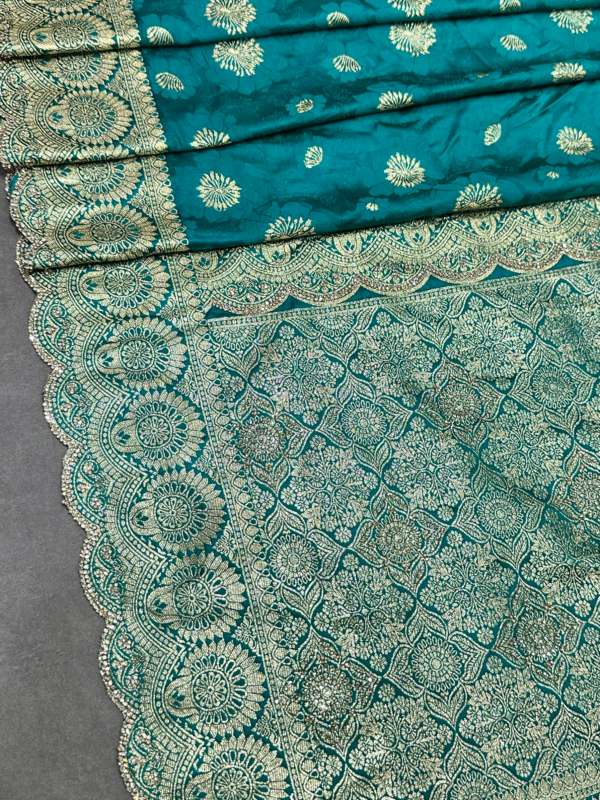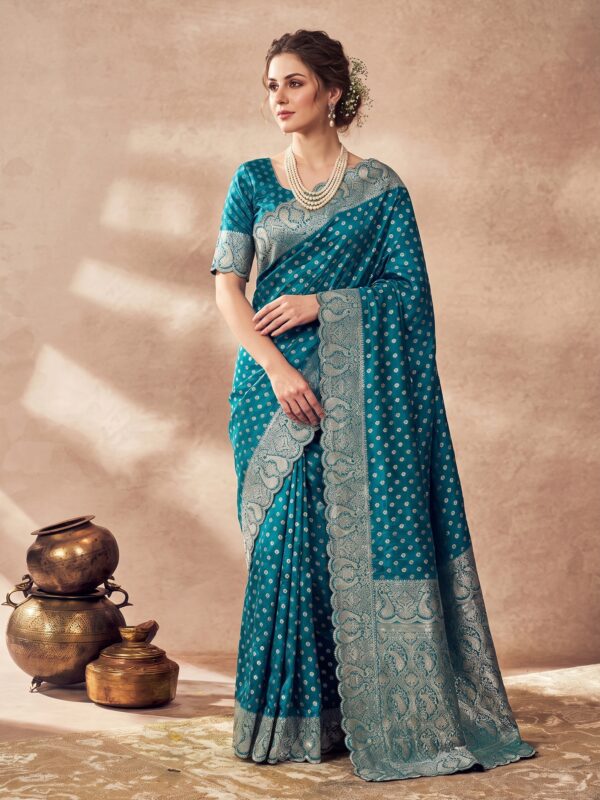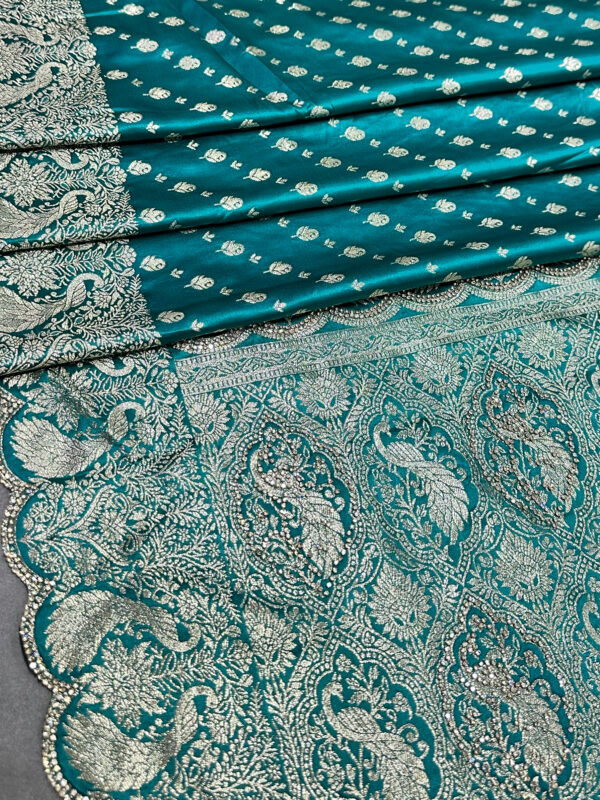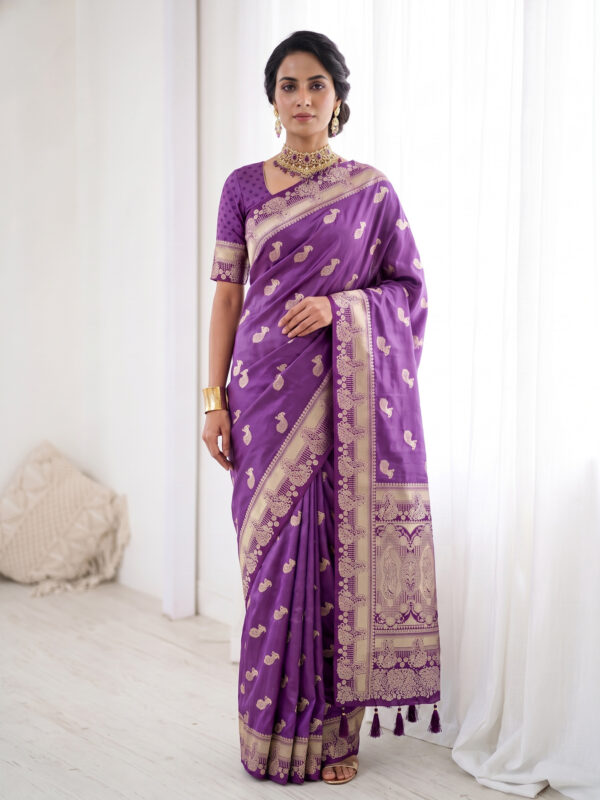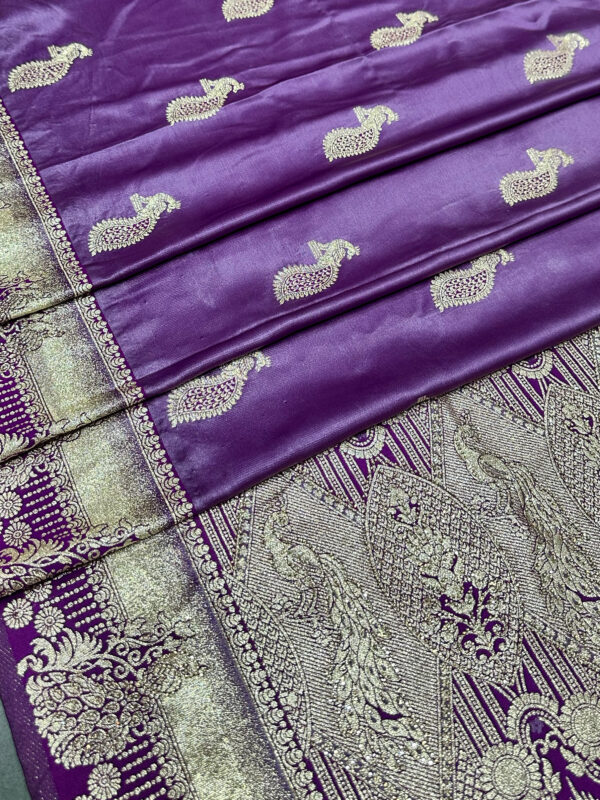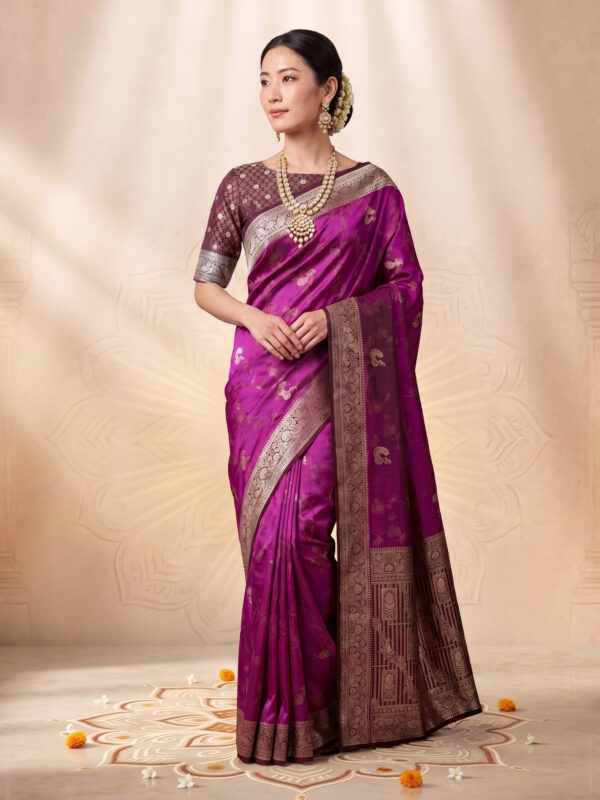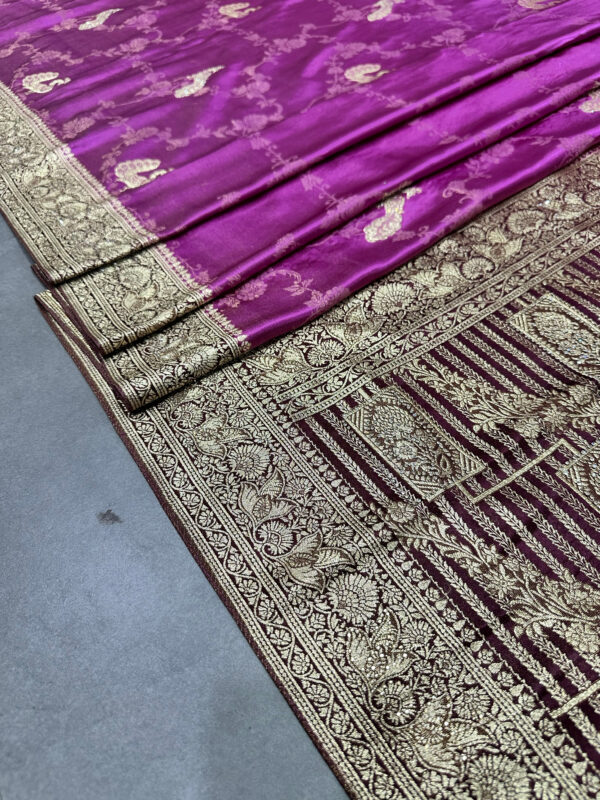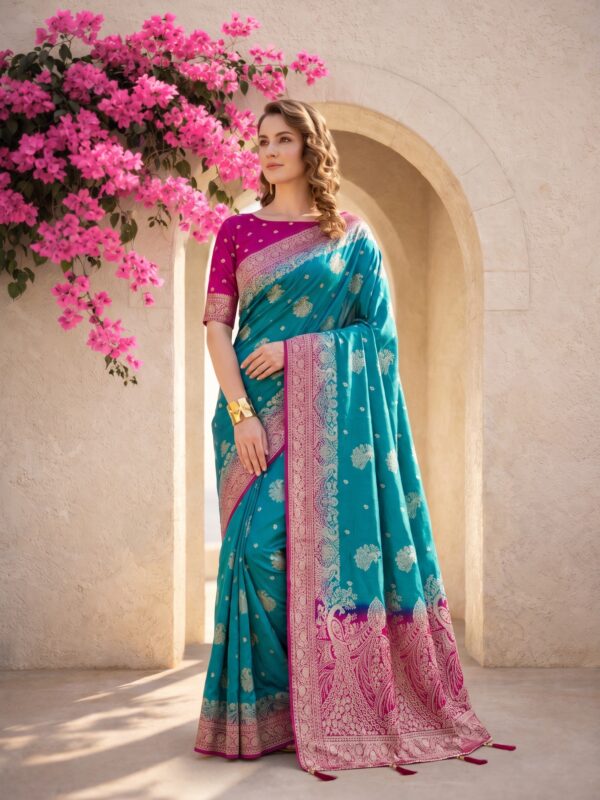
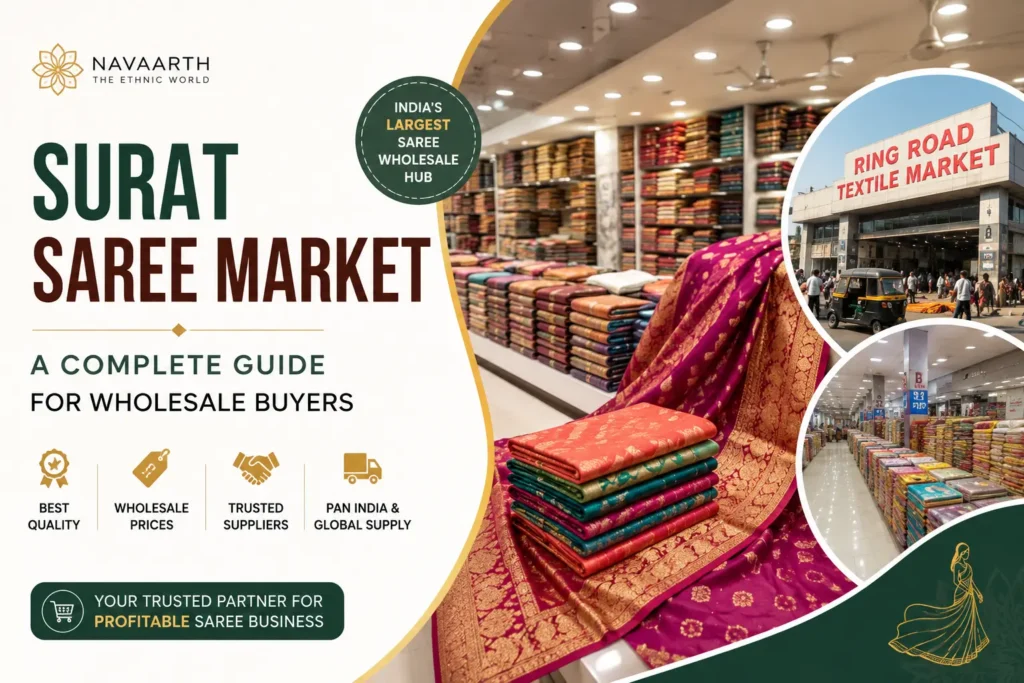
The Surat saree market is India’s largest hub for wholesale saree manufacturing and trading, made up of hundreds of textile markets, showrooms and manufacturer units concentrated mainly around Ring Road, Sahara Darwaja, Saroli and Umarwada. Retailers, boutique owners and resellers from across India and increasingly from the UAE, UK and other overseas markets source sarees here directly from manufacturers at prices lower than almost any other city in the country.
If you’re a retailer trying to figure out how this market actually works, who to buy from, and how to avoid the common mistakes first-time buyers make, this guide covers it in practical terms.
What Makes Surat the Centre of India’s Saree Trade
Surat is often called India’s textile capital, and the numbers back that up. According to the Southern Gujarat Chamber of Commerce and Industry (SGCCI), the city runs over 6 lakh power looms, houses more than 75,000 shops across its textile markets, and produces roughly 30 million metres of cloth every day. Industry publication Fibre2Fashion similarly reports that Surat accounts for around 40% of India’s man-made fabric output, with mills and power looms turning out an estimated 25–30 million metres of fabric daily.
This scale is what makes Surat different from other sourcing cities. Because fibre production, weaving, dyeing, printing and stitching all happen within a tight industrial radius, manufacturers can produce large volumes of sarees quickly and revise designs in step with changing trends which is why new saree patterns tend to appear in Surat’s markets faster than almost anywhere else in India.
For a retailer, this translates into three practical advantages: consistent restocking of popular designs, a wide range of price points from budget to premium, and shorter lead times between when a trend appears and when stock is available.
Where the Surat Saree Market Is Located
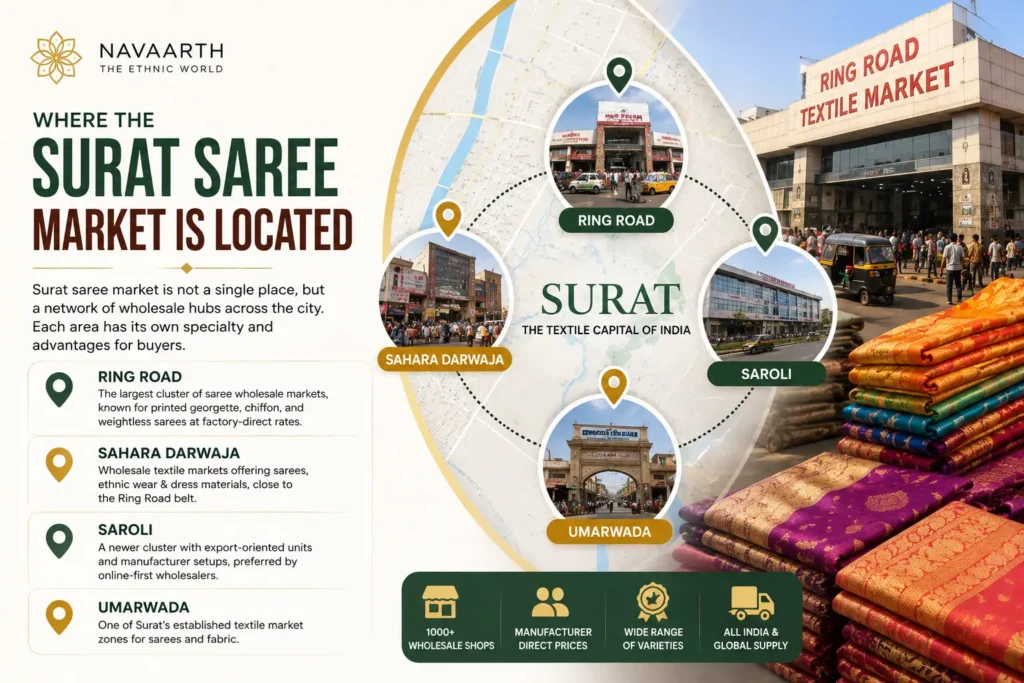
Surat saree market isn’t one single building it’s a network of wholesale clusters spread across the city, each with its own specialisation.
| Area | Known For |
| Ring Road | The largest concentration of saree wholesale markets in Surat, known for printed georgette, chiffon and weightless sarees at factory-direct rates |
| Sahara Darwaja | Wholesale textile markets offering sarees, ethnic wear and dress materials, located close to the Ring Road belt |
| Saroli | A newer cluster with export-oriented units and manufacturer setups, increasingly used by online-first wholesalers |
| Umarwada | One of the city’s established textile market zones for sarees and fabric |
Most physical markets in Surat operate on a business-to-business model bulk buyers, retailers and traders rather than single-piece retail, and nearly all of them stay closed on Sundays. If you’re planning to visit in person, checking a market’s specific weekday timings in advance saves a wasted trip.
How to Find a Reliable Saree Manufacturer in Surat
The honest answer: there is no single directory that ranks every manufacturer accurately, because the market has an estimated 20,000+ manufacturers and tens of thousands of wholesale outlets, and new units open every year. Instead of looking for a definitive “best” list, it’s more useful to know what actually separates a dependable supplier from a risky one.
1. Manufacturer-direct sourcing, not a reseller of a reseller. Every extra layer between you and the factory adds cost and reduces your margin. Ask directly whether the supplier owns or controls production, or is buying from someone else and marking it up.
2. A track record you can verify. Years in business, existing retailer relationships, and genuine buyer reviews matter more than a polished website. A supplier that has served retailers for over a decade has usually been tested through demand swings, fabric shortages and design cycles that newer sellers haven’t faced yet.
3. Real stock visibility before you pay. In a market this size, misrepresented fabric or colour is one of the most common complaints from retailers. Suppliers who let you inspect the actual saree in person or over a live video call before you commit to an order are lower risk than those who only show catalogue photos.
4. Clear terms on MOQ, exchange and payment. A trustworthy manufacturer states minimum order quantities, exchange or return policies, and payment terms upfront, usually through a Proforma Invoice before you pay anything.
5. Design rotation that matches demand. The Surat market moves fast. Manufacturers who refresh their catalogues regularly help you avoid stocking sarees your customers have already seen everywhere else.
Manufacturer, Wholesaler, or Trader? Know Who You’re Buying From
Not everyone selling sarees “from Surat” is actually manufacturing them. Understanding the difference helps you evaluate pricing and reliability.
| Type | What They Do | What It Means for You |
| Manufacturer | Produces sarees in-house or through controlled units | Best pricing, direct answers on fabric and production, but may have higher MOQs |
| Wholesaler/Distributor | Buys in bulk from manufacturers and resells to retailers | Wider variety across multiple manufacturers, slightly higher pricing than direct-from-factory |
| Trader/Middleman | Resells stock sourced from wholesalers | Lowest reliability and thinnest margins for you, since markup is added at multiple stages |
Asking a supplier directly, “Do you manufacture these, or source them from someone else?” is a fair question, and a genuine manufacturer-direct supplier will answer it without hesitation.
Visiting a Surat Saree Shop vs Sourcing Online
Many retailers still ask whether it’s worth travelling to Surat in person, or whether online sourcing works just as well. Both have trade-offs.
| Factor | Visiting In Person | Sourcing Online (Manufacturer-Direct) |
| Cost | Travel, stay, and time away from your shop | No travel cost |
| Stock inspection | Full physical handling of fabric | Live video-call inspection of real stock, if the supplier offers it |
| Time investment | 1–3 days minimum for a market visit | Can be done alongside daily shop operations |
| Best suited for | Large first-time orders, building direct factory relationships | Repeat orders, smaller cities, international buyers, time-constrained retailers |
| Risk of mismatch | Lower, since you see the saree directly | Depends entirely on whether the supplier shows real stock or only catalogue images |
The rise of video-call buying has closed much of the gap between the two. A retailer in Raipur or Pune, or an NRI buyer in Dubai or London, can now inspect fabric texture, embroidery and colour over a live call before placing an order something that wasn’t practically possible a few years ago. This is where a supplier’s willingness to show real, unfiltered stock (rather than edited catalogue photos) makes the biggest difference in trust.
Navaarth, a Surat-based B2B saree specialist with 18 years of manufacturer-direct wholesale experience, works this way through what it calls Surat On Call a live WhatsApp video-call session where buyers can view actual stock, ask about fabric and pricing, and place orders without travelling to Surat. Retailers can browse the current saree catalogue online and request pricing directly before scheduling a call.
Common Mistakes Retailers Make When Sourcing from Surat
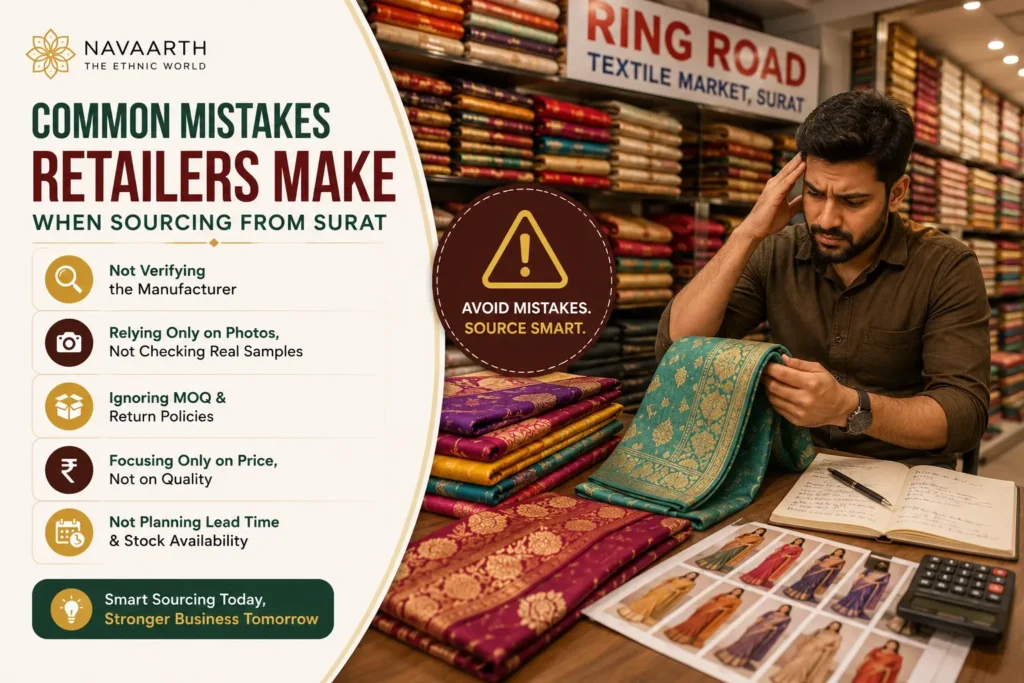
Ordering purely from catalogue photos. Screen colours and print details can look different from the actual fabric. Where possible, ask for a video call or physical sample before a bulk order.
Not clarifying the exchange policy upfront. Fabric defects and colour mismatches happen even with careful suppliers. Confirm the exchange window — Navaarth, for instance, offers a 35-day exchange policy — before you place your first order, not after.
Ignoring minimum order quantities (MOQ). MOQs vary by product and supplier. Confirm exact quantities and per-piece pricing at each quantity tier before committing, so there are no surprises on the Proforma Invoice.
Sourcing from too many suppliers at once, too early. New retailers sometimes spread small orders across many sellers to “test” the market. This usually means paying higher per-piece rates everywhere, since better pricing is tied to order volume with a single supplier over time.
Overlooking who handles customs for international orders. For overseas buyers, especially in the UAE and UK, customs clearance, import duties and local taxes are usually the buyer’s responsibility. Confirm this with your supplier before shipment.
What Retailers Should Ask Before Placing a Bulk Order
Before finalising any wholesale saree order from Surat, it helps to get clear answers to:
- Is this saree manufactured in-house, or sourced from another supplier?
- What is the minimum order quantity for this design, and does pricing change at higher quantities?
- Can I see the actual stock — in person or over video call — before paying?
- What is the exchange or return policy if a piece arrives with a defect?
- What are the expected dispatch and delivery timelines after payment?
- For international orders, who is responsible for customs and import duties?
A supplier that answers these clearly and in writing (typically through a Proforma Invoice) is generally a safer long-term sourcing partner than one that avoids specifics.
A Note for Retailers and Boutique Owners
Sourcing from the Surat saree market comes down to two things: finding a supplier you can verify is genuine, and being able to see what you’re actually buying before you commit to a bulk order. Whether that happens through a factory visit or a live video call, retailers who ask the right questions upfront consistently have fewer stock and exchange issues down the line.
If you’re evaluating suppliers, Navaarth’s wholesale saree collection covers 600+ rotating designs across fabrics like Dola Banarsi, handwork silk and printed sarees, with live video-call viewing and a 35-day exchange window. You can request current pricing or read retailer reviews before scheduling a call.