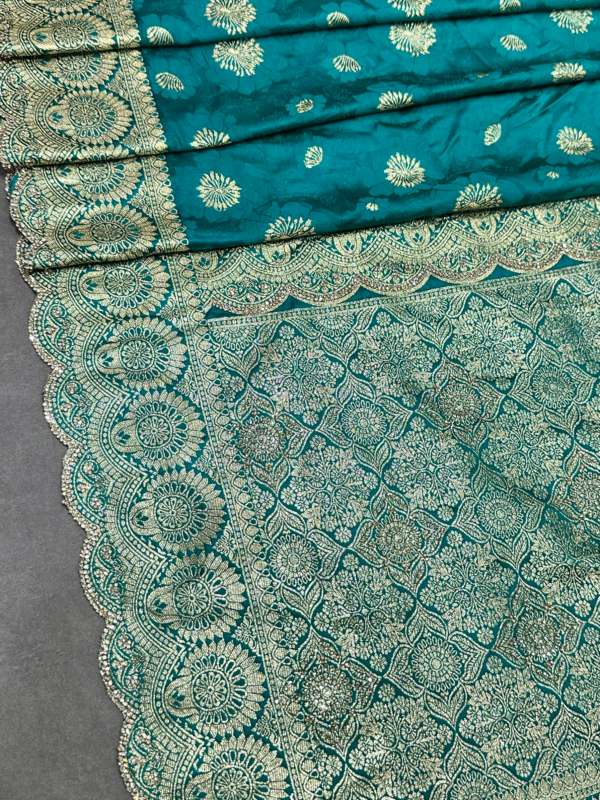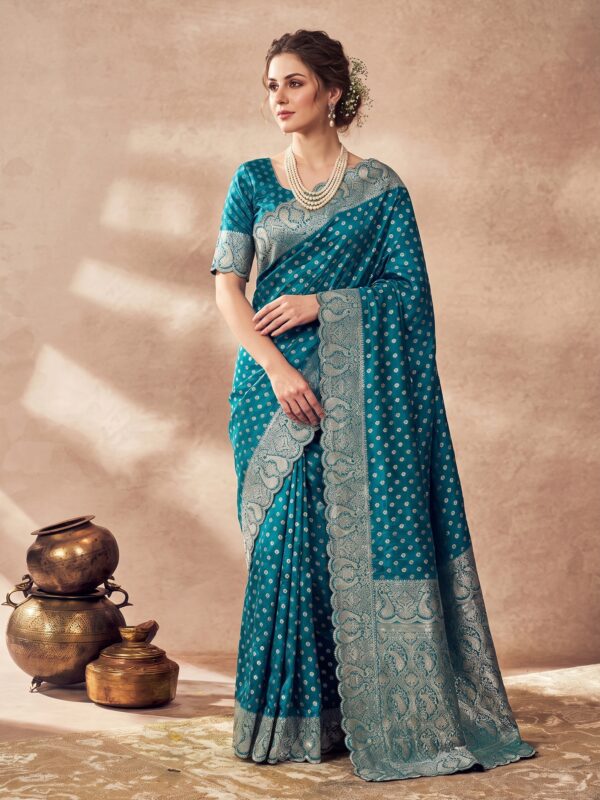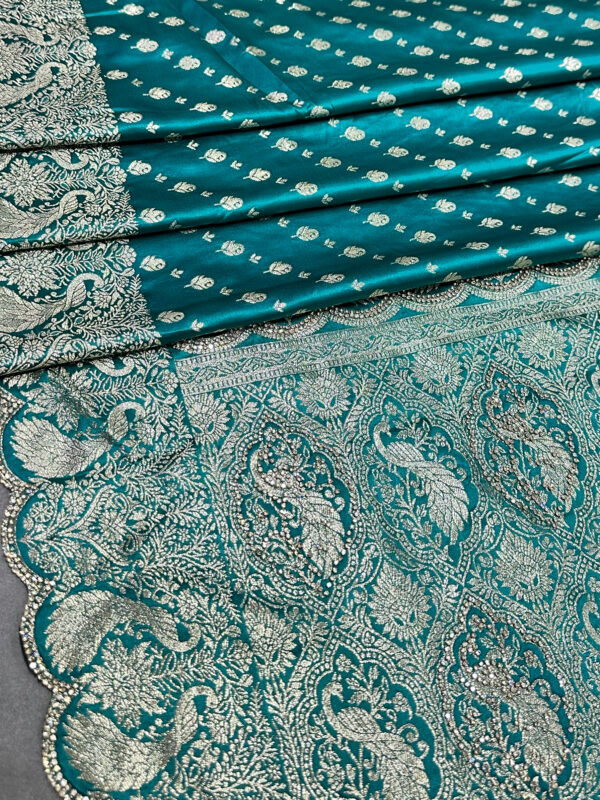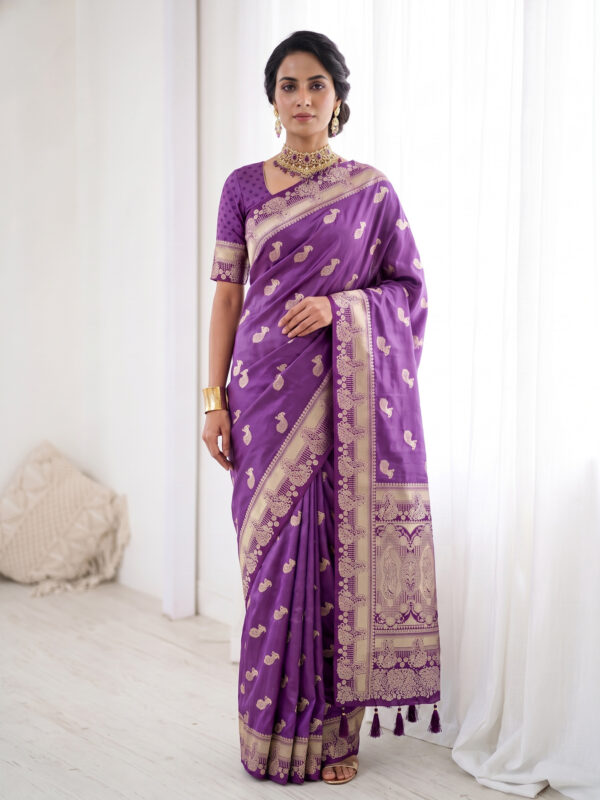
If you only have thirty seconds: no single test proves a Kanjivaram saree is pure silk. A Silk Mark label, a visible korvai join at the border, real zari that shows red silk underneath when gently rubbed, a soft-but-crisp handfeel, and a price that isn’t suspiciously low are all strong signals together. None of them, alone, is proof. If a seller can’t show you the reverse side of the weave, explain the zari, or answer basic questions about the loom, treat that as the bigger red flag than any single test.
The rest of this guide explains why that’s true, what each indicator actually tells you, where the popular home tests fall short, and how to check a saree properly whether you’re standing in a store in Kanchipuram or buying from a photo online.
Kanjivaram, Kanchipuram, Kanjeevaram are they the same saree?
Yes. Kanjivaram, Kanchipuram, and Kanjeevaram all refer to the same handwoven silk saree tradition from Kanchipuram, a temple town in Tamil Nadu. The differences are purely linguistic, not technical:
- Kanchipuram is the town’s name, and the most literal, formal way to refer to the saree.
- Kanjivaram / Kanjeevaram are anglicised spellings of the same word, more common in everyday retail and export conversation, especially outside Tamil Nadu.
- Locally, the saree is also called pattu, so you’ll sometimes see it listed as a Kanchipuram pattu saree.
So when someone asks is kanchi and kanchipuram the same, the answer is also yes – Kanchi is simply the short form of Kanchipuram, used the way people might say Benares for Banaras. There’s no separate saree category hiding behind any of these names, and no genuine difference between kanjivaram and kanchipuram sarees in terms of fabric, weave, or origin. If a seller tries to sell you a Kanjivaram as somehow distinct from or superior to a Kanchipuram saree, that’s a sign to ask more questions, not a real product distinction.
What actually makes a Kanjivaram saree “pure”
Before checking for fakes, it helps to know what you’re checking for. A genuine Kanjivaram saree is defined by three things working together, not any one of them alone:
- Pure mulberry silk in the body and border, rather than art silk, polyester, viscose, or a silk-synthetic blend.
- Real zari – silk or cotton thread wrapped with genuine silver, then gold-plated (or, in tested/pure zari, dipped in gold) rather than metallic polyester or plastic-coated thread.
- Traditional Kanchipuram weaving construction, most notably the way the body and border are woven separately and then interlocked, a technique commonly called korvai.
Weight, motifs, and even certification tell you about quality and probable authenticity. Only a lab test or an expert physically examining the weave can give you certainty. It’s worth holding both of those facts at once: home checks are genuinely useful for narrowing things down, and they are not a substitute for buying from someone you trust.
The construction check: korvai and the body-border join
This is one of the most reliable visual signals, and it’s also one of the most overlooked by buyers who focus only on zari and shine.
In a traditionally woven Kanchipuram saree, the body and the border are often woven as separate sections on the loom using separate shuttles, then locked together at the join the korvai technique. Look at the saree from the reverse side, along the line where the body colour meets the border colour:
- On a genuine korvai weave, you’ll usually see a slightly uneven, interlocking zigzag line where the two colours meet, and small loose thread ends tucked along that join.
- On a printed, powerloom, or machine-embellished imitation, the border is usually printed or embroidered directly onto the body fabric, so the “join” is just a flat colour change with no interlocking texture, and the reverse side looks almost identical to the front. Openly sold printed sarees aren’t a problem in themselves plenty of buyers want a printed drape for daily wear and know exactly what they’re getting. The issue is only when a printed or powerloom piece is being passed off as a handwoven Kanchipuram silk.
This single check won’t tell you whether the silk itself is pure, but it’s a strong, hard-to-fake indicator that you’re looking at a genuinely handloom-constructed Kanchipuram saree rather than a printed or powerloom lookalike. It’s also one of the easiest things to ask a seller to photograph or film if you’re buying online a legitimate seller will happily show the reverse side and the border join on request.
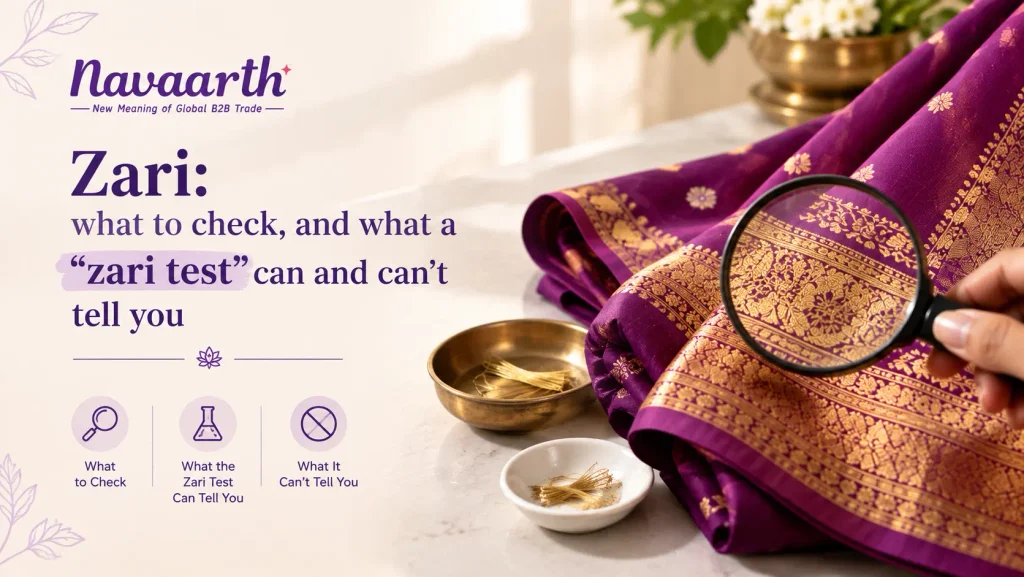
Zari: what to check, and what a “zari test” can and can’t tell you
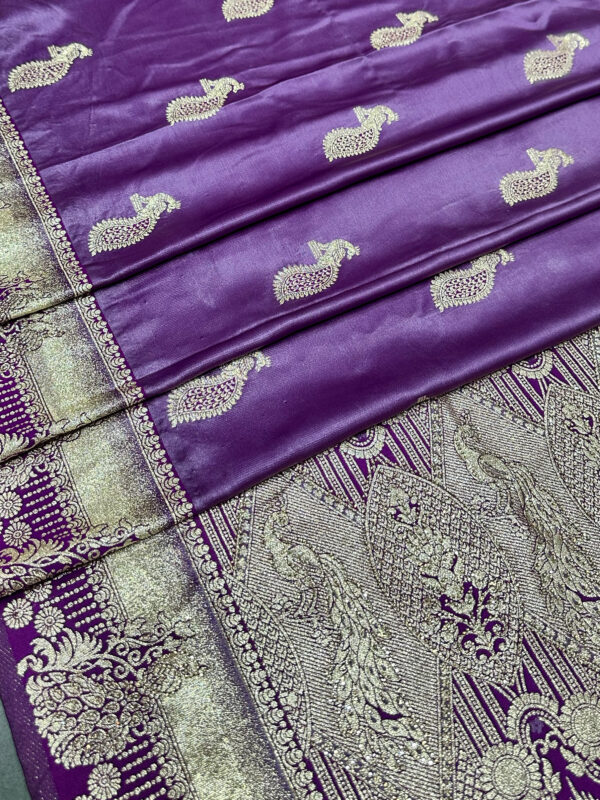
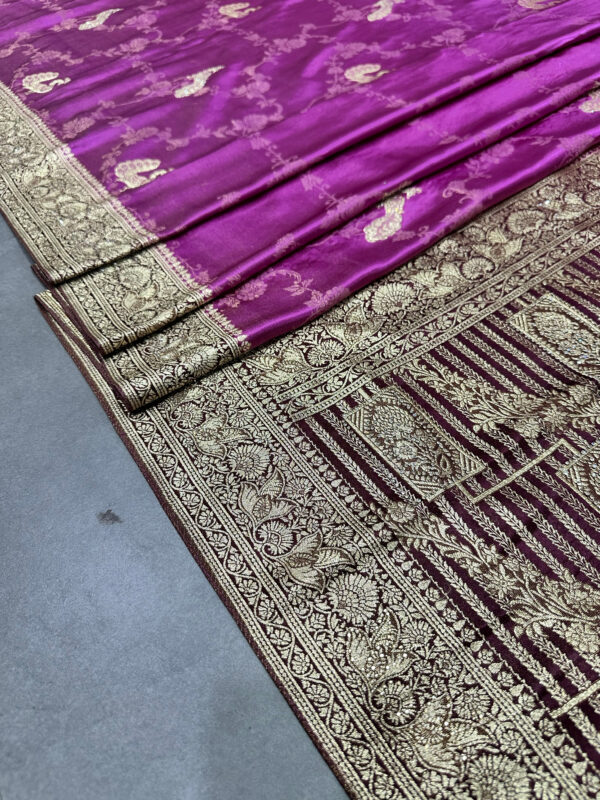
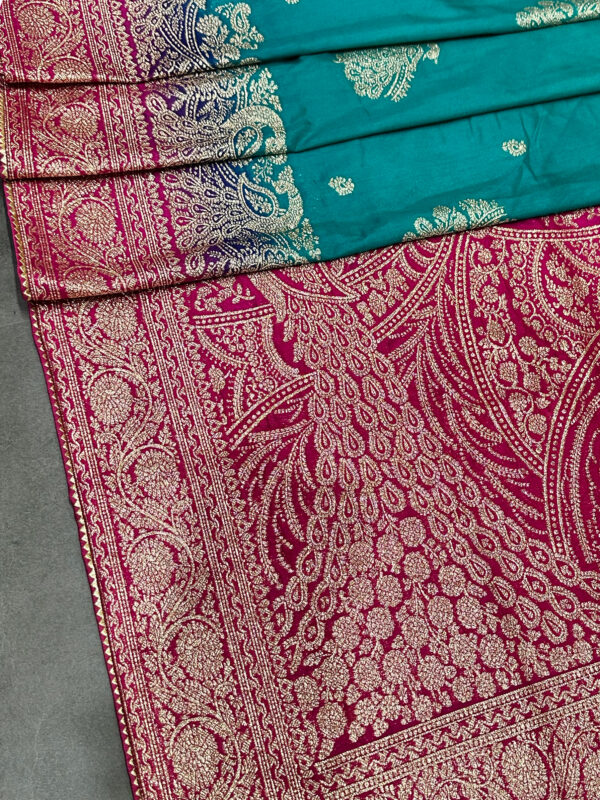
Real zari has weight, doesn’t flake, and typically shows a coloured silk or cotton thread core underneath the metallic wrap when you look closely or gently rub a small, inconspicuous section.
What this does tell you: whether the metallic thread is genuinely wrapped/plated rather than printed foil or plain metallic polyester yarn.
What it doesn’t tell you: how much silver or gold is actually in that plating, or whether it meets any formal purity standard. “Tested zari,” “pure zari,” and “half-fine zari” are all real, different categories in the market, and a home rub test can’t reliably tell you which one you’re holding it can only help you rule out the most obvious fakes, like plastic-coated or printed borders. Reputable sellers should be able to tell you plainly which category of zari a saree uses; if a seller is vague or evasive about this, treat that as more informative than any test you can do at home.
Silk Mark and other certification: useful, but not automatic proof
The Silk Mark, issued by the Silk Mark Organisation of India, certifies that a labelled product is made of natural silk. Seeing a Silk Mark tag is a genuinely useful, independently issued signal it’s stronger evidence than any single home test, because it comes from testing done outside the seller’s own claims.
That said, it’s worth being precise about what it proves and what it doesn’t:
- It certifies the silk content, not the weaving technique, the zari purity, or which specific saree in a seller’s inventory a loose tag belongs to.
- Its absence doesn’t automatically mean a saree is fake many genuine handloom weavers, especially smaller and independent ones, sell without a Silk Mark tag, particularly for older or resold pieces.
- A tag can, in principle, be reused or misapplied, so it’s one strong input among several rather than a single conclusive stamp.
If certification matters a great deal to you for a high-value bridal purchase, for instance the most reliable approach is to buy from a seller who can show the certification tied clearly to the specific saree, and to keep that documentation with your purchase.
Weight, texture, and drape – read these as clues, not proof
These three are the most commonly cited indicators, and also the most commonly overstated.
Weight. Pure silk with real zari does tend to have a noticeable heft, especially in the border and pallu where zari is concentrated. But weight alone isn’t reliable: sarees vary in weight by design, and some imitations are deliberately made heavier with synthetic fillers or extra zari-look thread specifically to mimic the feel buyers associate with “real” silk. Treat unusual heaviness or lightness as a prompt to look closer, not as a verdict either way.
Texture. Pure mulberry silk typically feels smooth with a slight natural crispness, rather than the slippery, almost soapy feel common to polyester and viscose blends, or the flat, papery feel of some heavily starched or printed fabrics. This is a genuinely useful clue if you’ve handled pure silk before but it takes some experience to judge confidently, and it isn’t something photos can convey when you’re buying online.
Drape and lustre. Pure silk tends to fall with body rather than clinging or crumpling, and its shine looks like it’s coming from within the fibre rather than sitting on the surface as a coating. On its own, though, lustre is one of the easiest things for synthetic fabrics to imitate convincingly, especially in photographs, so don’t let shine alone override the other checks.
Motifs and design – traditional, but not exclusive to genuine sarees
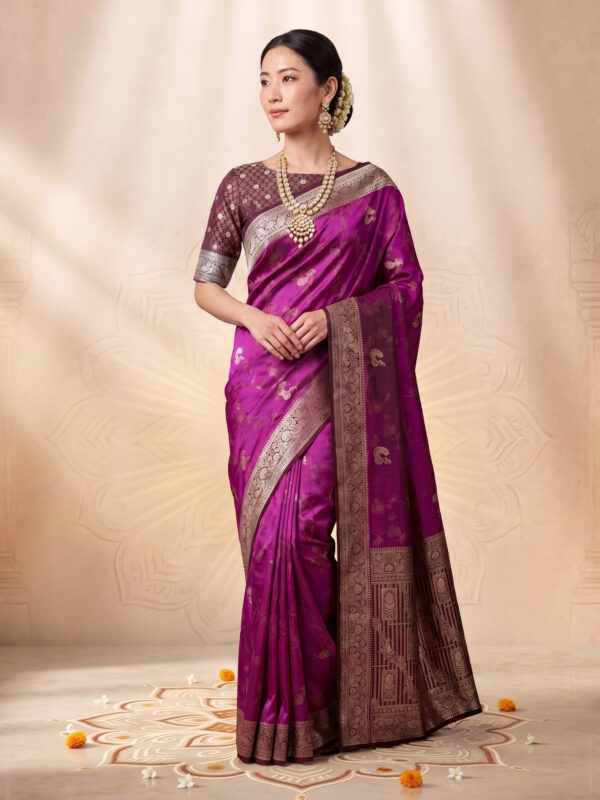
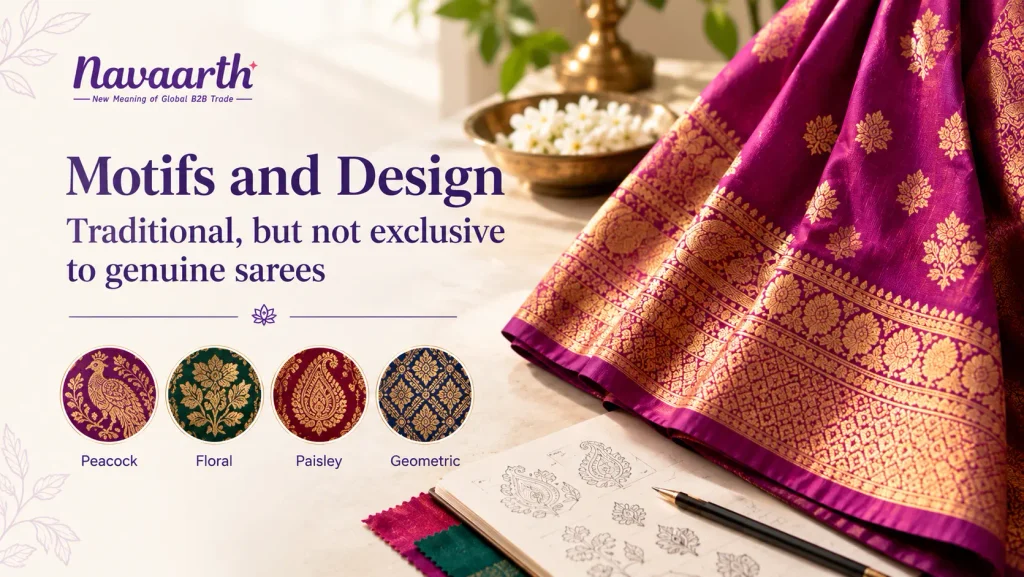
Kanjivaram sarees are known for temple-inspired and nature-inspired motifs peacocks, parrots, mangoes, checks, stripes, and temple borders among them, often drawn from carvings and imagery in South Indian temple architecture. These motifs are a genuine part of the tradition and worth knowing, but they aren’t a purity test by themselves: printed, embroidered, and powerloom sarees can and do copy the same motifs closely, sometimes very convincingly. Use motifs to understand what you’re looking at and to talk knowledgeably with a seller not as evidence of authenticity on their own.
Home tests that are commonly suggested and their real limits
A few tests come up in almost every how to spot fake Kanjivaram article. They’re not useless, but each has a real limitation worth knowing before you rely on it.
- The burn test can help distinguish natural protein fibres like silk from purely synthetic ones like polyester. It is not a reliable way to confirm the saree is a genuine Kanchipuram weave, since silk-blend and even some non-Kanchipuram pure silk fabrics can pass the same smell-and-ash test. It also damages the saree, isn’t practical while shopping in a store or buying online, and results can be genuinely hard to judge without experience. Treat it, at most, as a last-resort check on a loose thread you’re allowed to remove never as a definitive verdict.
- The ring test is meant to show how fine and smooth the silk is. Some genuine Kanjivaram sarees, particularly heavier bridal weaves with dense zari, simply won’t pass through a ring that doesn’t make them fake. This test is more suited to lighter, plain silks than to zari-heavy Kanchipuram weaves.
- Rubbing zari to check for red thread underneath helps rule out printed or plastic “zari,” as noted above, but can’t tell you the purity grade of the metal plating, and rubbing too hard can damage a genuine saree’s zari.
- “It’s expensive, so it must be real” is a useful sanity check against suspiciously cheap listings, but price is easy to fake in the other direction too a high price tag doesn’t guarantee purity, and genuinely good handloom silk-cotton or lighter Kanjivaram weaves can be sold at more modest prices than heavy bridal pieces.
None of these tests, alone, is a definitive authentication method. Used together, and read alongside the construction and certification checks above, they meaningfully narrow the odds which is the realistic goal of a home check.
A practical checklist before you buy
| Check | What it tells you | Reliability on its own |
|---|---|---|
| Silk Mark or other independent certification | Silk content verified by a third party | Strong, but check it’s tied to the specific saree |
| Reverse-side border join (korvai) | Whether it’s a genuine handloom construction | Strong visual indicator |
| Zari rub/scratch (small, hidden area) | Whether zari is real thread vs. printed/plastic | Useful, doesn’t confirm purity grade |
| Weight and texture | General likelihood of real silk and zari | Moderate varies by saree type |
| Motifs and design | Whether it fits Kanchipuram tradition | Low on its own easily copied |
| Price vs. market range | Sanity check against obvious fakes | Moderate not proof either way |
| Seller transparency and documentation | Seller’s confidence and accountability | High when combined with the above |
Buying online: what to ask for and check in photos or video
Most Kanjivaram buyers today are choosing sarees from photos, not in person, so it’s worth knowing what a trustworthy listing or seller should be able to give you:
- Close-up photos or video of the reverse side, especially the border join.
- A clear photo of the zari close-up, ideally in natural light.
- The exact fabric composition stated plainly “pure mulberry silk,” not just “silk saree” and the zari category
- Weight of the saree, since it’s a genuinely useful data point when a seller states it upfront rather than as your only proof.
- Any certification, and confirmation it applies to that specific piece.
- A straightforward answer to direct questions like “is this korvai woven” or “is the zari pure or tested” hesitation or vague marketing language in response to specific questions is a bigger warning sign than any single photo detail.
For retailers, boutiques, and resellers building out a catalogue rather than buying a single saree, the same principles apply at scale: request documentation and weaving details from your supplier for every batch, not just spot pieces, since customers increasingly ask these same questions before they buy. If you’re sourcing sarees for resale more broadly, it’s worth browsing Navaarth’s wholesale saree collections to see how fabric, catalogue, and pricing details are typically laid out for B2B buyers.
Common mistakes buyers make
- Trusting a single test completely. Passing a burn test or a ring test doesn’t rule out a blended or partially synthetic saree it only rules out the most obvious fakes.
- Assuming “Kanjivaram” and “Kanchipuram silk” name different products. As covered above, they’re the same tradition; a seller drawing an artificial distinction between the two names is worth questioning.
- Judging purely by price. Both “too cheap to be real” and “expensive, so it must be genuine” can mislead you if you stop there.
- Skipping the reverse side. Buyers focus on the front, pallu, and colour but the reverse side and the border join are where construction is easiest to verify.
- Not asking sellers direct questions. A confident, specific answer about silk content, zari type, and weaving technique tells you more than most home tests combined.
When to trust expert or certified verification over a home check
Home checks are genuinely useful for day-to-day buying decisions and for narrowing down obvious imitations. For anything where the stakes are higher a significant bridal purchase, an heirloom piece, or a saree bought as an investment the more reliable path is expert or laboratory verification: a Silk Mark-certified purchase with documentation tied to that saree, or, where available, an appraisal from someone experienced in handloom textiles who can examine the weave directly. No home test replicates that level of certainty, and it’s a reasonable step for any purchase where “probably genuine” isn’t a comfortable enough answer.
Frequently asked questions
Q.1 is Kanjivaram the same as Kanchipuram silk?
Yes. Both names refer to the same handwoven silk saree tradition from Kanchipuram, Tamil Nadu. Kanjivaram is simply the more commonly used anglicised name; Kanchipuram is the more formal, place-based name for the same saree.
Q.2 Can I tell if a Kanjivaram saree is pure silk just by looking at it?
You can get a strong indication from the texture, the reverse-side border join, and the zari but a visual check alone can’t give you certainty, especially with well-made imitations. Combining several checks, and buying from a transparent seller, gets you much closer to a confident answer than any single glance.
Q.3 Is the burn test reliable for Kanjivaram sarees?
It can help confirm the fibre is a natural, silk-like protein fibre rather than pure polyester, but it can’t confirm the saree is a genuine Kanchipuram weave, it damages the fabric, and results are easy to misjudge without experience. It’s better used as one input among several than as a final verdict.
Q.4 Does a heavier saree always mean it’s more authentic?
No. Weight is influenced by zari quantity and saree type as much as by silk purity, and some imitations are deliberately weighted to feel “real.” A heavy saree isn’t automatically genuine, and a lighter genuine Kanjivaram (a soft-silk or lightweight festive weave, for example) isn’t automatically fake.
Q.5 What does Silk Mark actually certify?
It certifies that the labelled product is made of natural silk, based on testing by the Silk Mark Organisation of India. It’s a strong, independently verified signal of silk content, but it doesn’t certify the weaving technique, zari purity grade, or automatically apply to every piece from a seller unless the tag is specifically tied to that saree.
Q.6 Why do some Kanjivaram sarees not have a Silk Mark tag?
Many genuine handloom weavers, especially smaller or independent ones, and resold or older pieces, may not carry a Silk Mark tag even though the saree is authentic. Absence of the tag isn’t proof of a fake — it just means you’ll want to rely more heavily on the other checks and on the seller’s credibility.
Q.7 What’s the difference between Kanjivaram silk and “art silk” or “silk-look” sarees?
Pure Kanjivaram silk uses mulberry silk yarn; “art silk” is a marketing term for viscose or other synthetic fibres finished to resemble silk’s shine, and doesn’t contain silk at all despite the name. Fabrics like satin silk and viscose satin are genuinely useful, budget-friendly saree categories in their own right — they’re just a different fabric from handwoven Kanchipuram silk, with a different feel and drape, and shouldn’t be confused with it at purchase time.